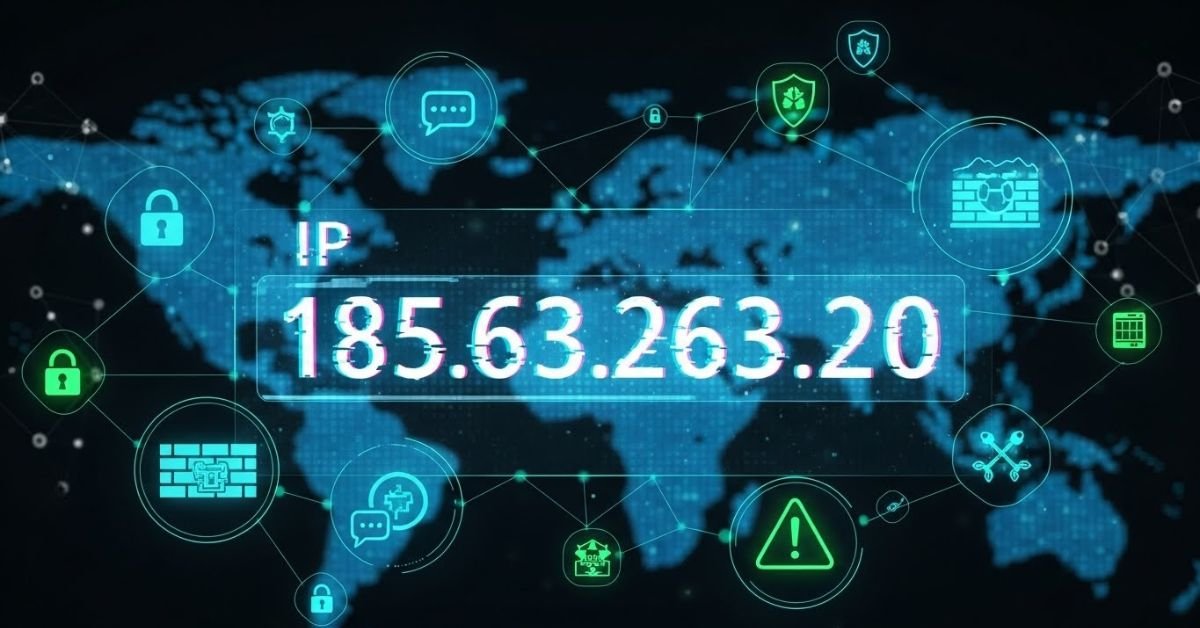
In the modern digital world, IP addresses are everywhere, yet most people rarely stop to think about what they actually represent. One such address that sometimes catches attention is 185.63.263.20. Whether you encountered it in server logs, security alerts, analytics tools, or casual research, this IP address can raise questions. Is it safe? Is it private or public? Who owns it? What role does it play in internet communication?
This article takes a deep dive into 185.63.263.20, breaking it down in a practical, expert-level yet easy-to-understand way. We’ll explore how IP addresses work, what this specific address indicates, how it might be used, potential security considerations, and what to do if you come across it in your systems.
Understanding IP Addresses Before Analyzing 185.63.263.20
To properly understand 185.63.263.20, it’s important to first understand what an IP address actually is. An IP (Internet Protocol) address acts like a digital home address for devices on the internet. It allows computers, servers, and networks to find and communicate with one another efficiently.
An IP address ensures that when you request a website, send an email, or load a video, the data knows exactly where to go and where it came from. Without IP addresses, the internet as we know it simply would not function.
There are different types of IP addresses, including IPv4 and IPv6, as well as public and private addresses. The address 185.63.263.20 falls into the IPv4 category, which is still the most widely used protocol globally.
Is 185.63.263.20 an IPv4 or IPv6 Address?
The IP address 185.63.263.20 is clearly an IPv4 address, identifiable by its four numerical segments separated by dots. Each segment (called an octet) ranges from 0 to 255.
IPv4 addresses are limited in number, which is why IPv6 was introduced. However, IPv4 remains heavily used across hosting providers, enterprise networks, and legacy systems.
From a technical perspective, 185.63.263.20 follows the standard IPv4 structure and behaves like any other public IPv4 address on the internet.
Public vs Private IP: Where Does 185.63.263.20 Belong?
One of the most important distinctions to make is whether an IP address is public or private. Private IP addresses are used inside local networks and cannot be accessed directly from the internet.
The IP address 185.63.263.20 is a public IP address. This means it is reachable over the internet and can be assigned to a server, hosting environment, or publicly accessible service.
Public IP addresses are typically managed by internet service providers (ISPs), cloud platforms, or hosting companies. Because this address is public, it can appear in logs, firewall rules, security scans, and analytics reports.
Ownership and Allocation of 185.63.263.20
Every public IP address is allocated by a regional internet registry (RIR). These organizations distribute IP address blocks to ISPs, data centers, and organizations.
The 185.x.x.x range is commonly associated with European IP allocations, though this does not always mean the server is physically located in Europe. Hosting providers often assign IPs dynamically across global infrastructure.
Ownership of 185.63.263.20 may belong to:
-
A data center
-
A hosting provider
-
A VPN service
-
A cloud infrastructure provider
-
A corporate network
Because IP ownership can change over time, the purpose of this IP address can evolve depending on how it is assigned.
Common Uses of IP Address 185.63.263.20
The IP address 185.63.263.20 may be used in a variety of legitimate and technical contexts. Public IPs like this are frequently assigned to servers or network services.
One common use is web hosting. Many websites operate on shared or dedicated servers that use public IP addresses. In such cases, 185.63.263.20 could be hosting one or multiple websites.
Another frequent use is API services. Developers often deploy APIs on cloud servers that require a fixed public IP for accessibility and security configuration.
It may also be used for email servers, remote access systems, VPN gateways, or content delivery services. In these scenarios, the IP acts as a gateway between users and backend systems.
Why You Might See 185.63.263.20 in Server Logs
If you are a website owner or system administrator, you may encounter 185.63.263.20 in your server access logs or firewall records. This can happen for many normal reasons.
For example, a legitimate user visiting your website could be routed through a proxy, hosting provider, or VPN that uses this IP address. Automated tools, crawlers, or monitoring systems can also generate log entries.
Sometimes, IP addresses appear during uptime checks, SEO crawls, or security scans. Seeing an unfamiliar IP does not automatically indicate malicious activity.
Context matters, and understanding patterns of behavior is far more important than focusing on a single IP entry.
Security Considerations Related to 185.63.263.20
Security is often the reason people search for specific IP addresses. While 185.63.263.20 is not inherently dangerous, any public IP can potentially be misused depending on how it is deployed.
If this IP is associated with repeated failed login attempts, unusual traffic spikes, or exploit attempts, it could indicate automated scanning or brute-force activity. However, the same IP might also belong to a security researcher or automated service.
It’s important not to jump to conclusions. Modern internet traffic is noisy, and many legitimate services behave in ways that resemble suspicious activity at first glance.
The best approach is to correlate behavior, frequency, and intent rather than blocking an IP simply because it appears unfamiliar.
Is 185.63.263.20 a VPN or Proxy IP?
One possibility when encountering 185.63.263.20 is that it belongs to a VPN or proxy service. VPN providers often use shared IP addresses across many users.
This means multiple unrelated users can appear to originate from the same IP. As a result, VPN IPs frequently show up in logs across many websites.
If 185.63.263.20 is associated with a VPN, you may see:
-
Repeated access from different locations
-
Multiple user agents
-
Short session durations
-
High traffic variability
VPN IPs are not inherently bad, but they are often treated cautiously by security systems due to abuse potential.
How IP Reputation Impacts 185.63.263.20
IP reputation plays a significant role in how traffic is treated by servers, email systems, and security platforms. An IP with a poor reputation may face rate limiting, captchas, or outright blocking.
The reputation of 185.63.263.20 depends entirely on how it has been used over time. If the IP has been associated with spam, malware distribution, or abuse, it may be flagged by security databases.
On the other hand, if it is used for legitimate hosting or services, its reputation is likely neutral or positive.
IP reputation is dynamic, meaning it can change as usage patterns change.
SEO and Analytics Perspective on 185.63.263.20
From an SEO and analytics standpoint, seeing 185.63.263.20 in traffic reports can raise questions about bot traffic versus real users.
Search engine crawlers, SEO tools, and third-party analytics platforms often operate from known IP ranges. While 185.63.263.20 is not inherently tied to a major search engine, it could belong to an SEO monitoring service.
Analyzing metrics such as bounce rate, session duration, and page depth can help determine whether traffic from this IP is meaningful or purely automated.
Understanding this distinction helps website owners make better decisions about blocking, filtering, or allowing traffic.
Can 185.63.263.20 Be Traced to a Physical Location?
IP geolocation can provide a general idea of where an IP is registered, but it is never perfectly accurate. With 185.63.263.20, location data may point to a country, city, or data center region.
However, this does not mean the actual user is physically located there. VPNs, cloud servers, and proxies often mask real user locations.
IP geolocation should be treated as an estimate rather than a precise tracking method.
Legal and Ethical Aspects of Monitoring IP Addresses
Monitoring IP addresses like 185.63.263.20 is common practice in cybersecurity, analytics, and system administration. However, it’s important to understand the legal and ethical boundaries.
IP addresses are considered personal data in some jurisdictions, especially when combined with other identifying information. Proper handling, anonymization, and transparency are key.
Responsible usage ensures compliance with privacy regulations while maintaining security and performance.
What To Do If You Suspect Abuse From 185.63.263.20
If you believe 185.63.263.20 is engaging in harmful behavior toward your systems, the first step is to gather evidence. Look at timestamps, request patterns, and affected endpoints.
Temporary rate limiting is often more effective than permanent blocking. This reduces risk without unnecessarily restricting legitimate users.
In more serious cases, you can report abusive behavior to the IP’s hosting provider, who may investigate further.
Should You Block 185.63.263.20?
Blocking an IP address should always be a calculated decision. Blocking 185.63.263.20 without clear evidence may disrupt legitimate traffic.
Instead of permanent blocks, consider:
-
Rate limiting
-
CAPTCHA challenges
-
Behavior-based filtering
-
Monitoring over time
This approach provides better long-term security without harming user experience.
How IP Addresses Like 185.63.263.20 Fit Into the Bigger Internet Picture
IP addresses are the backbone of internet communication. 185.63.263.20 is just one of billions of identifiers that keep data flowing across networks.
Each IP plays a role, whether hosting a website, routing traffic, or enabling secure connections. Understanding this helps demystify the internet and encourages smarter decision-making.
Rather than fearing unknown IP addresses, it’s better to analyze them thoughtfully and contextually.
Future of IPv4 Addresses Like 185.63.263.20
With IPv4 exhaustion becoming more pronounced, addresses like 185.63.263.20 are increasingly valuable. Many organizations reuse, lease, or carefully manage IPv4 allocations.
While IPv6 adoption continues to grow, IPv4 will remain relevant for years to come, especially in legacy systems and regions with slower transitions.
This makes understanding IPv4 addresses more important than ever.
Final Thoughts on 185.63.263.20
The IP address 185.63.263.20 is a standard public IPv4 address that can serve many legitimate purposes. By itself, it is neither good nor bad. Its significance depends entirely on how it is used.
Whether you encountered it in logs, research, or curiosity, understanding the broader context is key. With proper analysis, thoughtful security practices, and informed decision-making, IP addresses like this become tools rather than mysteries.